⚖️ Supreme Court to Decide Major West Bengal Teachers' Appointment Case: Why the Judgment Matters
📢 Disclaimer
This article is for legal awareness and educational purposes only. At the time of writing, the Supreme Court is scheduled to pronounce its judgment in the matter. This article summarizes the background of the case and the legal issues involved based on publicly available court reports. It does not speculate on the Court's final decision.
🏛️ A Crucial Day for Thousands of Teachers
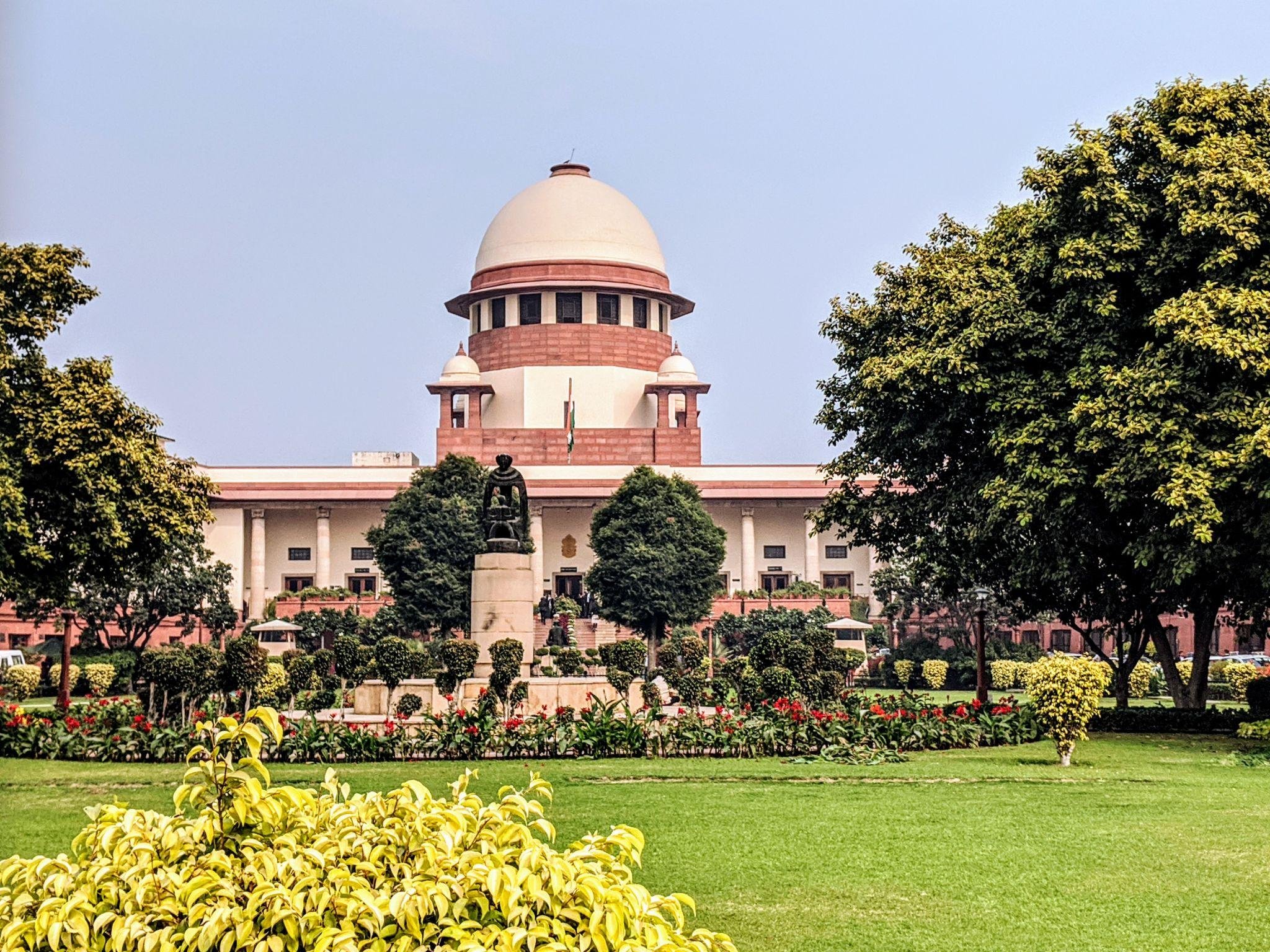
The Supreme Court is set to deliver one of the most significant judgments concerning teachers and non-teaching staff employed in recognized Madrasas across West Bengal.
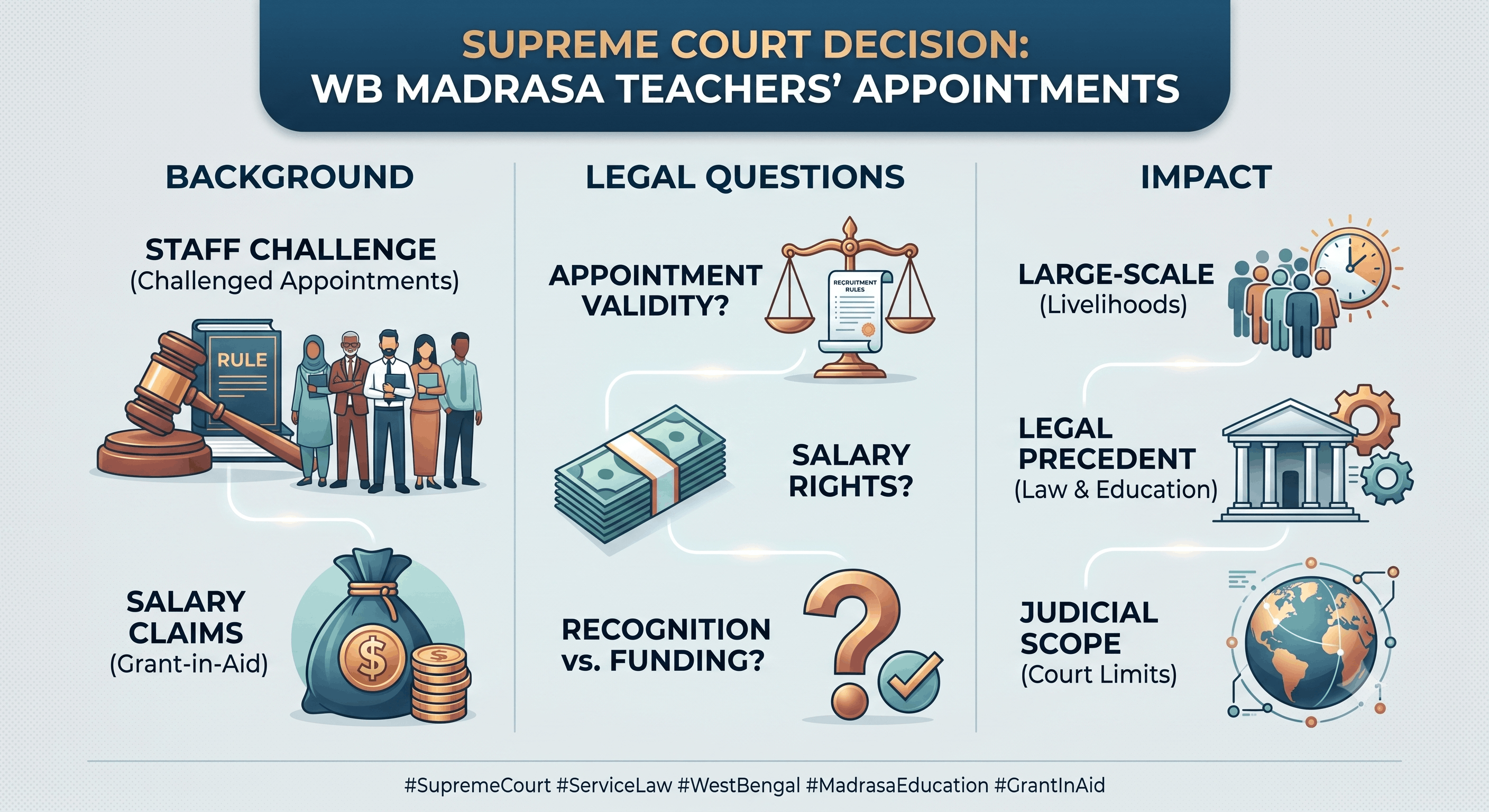
The case concerns the rejection of appointments and claims for salary under the State Government's grant-in-aid scheme.
For thousands of employees whose livelihoods depend on this decision, the judgment could have far-reaching consequences.
📖 What Is the Case About?
The petitions before the Supreme Court have been filed by:
- 👨🏫 Teachers
- 👩💼 Non-teaching employees
working in recognized Madrasas across West Bengal.
The petitioners have challenged decisions that allegedly:
- Rejected their appointments.
- Denied salary benefits.
- Excluded them from financial assistance under the State's grant-in-aid policy.
They argue that they are entitled to recognition and salary under the applicable legal framework.
💰 What Is a Grant-in-Aid Scheme?
A grant-in-aid scheme is a financial assistance program through which a State Government provides funds to eligible educational institutions.
These grants generally help cover:
- Salaries of teachers
- Salaries of non-teaching staff
- Educational administration
- Institutional development
However, eligibility depends on statutory rules, government policies, and recognition requirements.
⚖️ The Key Legal Questions Before the Supreme Court
The Court is expected to examine several important issues, including:
📌 Were the appointments legally valid?
The Court may examine whether the appointments complied with the applicable recruitment rules and government regulations.
📌 Are the employees entitled to salary?
The petitioners seek payment under the grant-in-aid scheme, while the State's position is expected to rely on the governing policy framework.
📌 Can recognition alone create a right to government funding?
One of the broader questions is whether recognition of an educational institution automatically entitles its employees to receive State financial assistance.
📌 What role should courts play?
The Court may also consider the extent to which judicial review can intervene in government policy relating to educational funding and appointments.
🌍 Why This Judgment Matters
Although the dispute originates in West Bengal, its implications extend beyond a single State.
The judgment could influence future disputes involving:
- 📚 Educational institutions
- 👨🏫 Teacher appointments
- 💼 Government funding
- 🏛️ Administrative decisions
- ⚖️ Service law
The decision may also provide greater clarity on the relationship between recognition, appointments, and government financial assistance.
📌 Possible Impact
Depending on the Court's decision, the judgment may affect:
- Thousands of teaching and non-teaching employees.
- Future recruitment practices.
- State grant-in-aid policies.
- Funding mechanisms for recognized educational institutions.
- Similar pending cases involving educational service matters.
⚖️ Why This Is Legally Significant
The dispute highlights an important principle of public law:
Government financial benefits are generally governed by statutory rules and policy decisions.
The Court's ruling may clarify when employees can legally claim salary benefits and when government discretion prevails.
📚 Key Takeaways
✅ The Supreme Court is hearing petitions filed by teachers and non-teaching staff from recognized Madrasas in West Bengal.
✅ The dispute concerns rejected appointments and salary claims under the State's grant-in-aid scheme.
✅ The judgment could affect educational service law and government funding policies.
✅ The Court's decision may become an important precedent for similar disputes across India.
🎯 Final Thoughts
This case is about much more than salaries.
It raises important constitutional and administrative questions concerning education, public funding, service law, and judicial review.
The Supreme Court's judgment is expected to provide much-needed clarity on how government policies governing educational institutions should be interpreted and applied.
For thousands of employees awaiting the outcome, the decision could significantly impact both their professional future and financial security.
📚 Source
- Bar & Bench – Supreme Court to pronounce judgment in petitions filed by teachers and non-teaching employees of recognized Madrasas in West Bengal challenging rejection of appointments and salary claims under the State's grant-in-aid scheme.
- Supreme Court of India (case proceedings, as applicable).
🏷️ Suggested Tags
#SupremeCourt #WestBengal #EducationLaw #ServiceLaw #GrantInAid #Teachers #Madrasa #IndianLaw #LegalNews #DefendInk