The Issue
Administrative delays in property-related approvals often create major challenges for property owners.
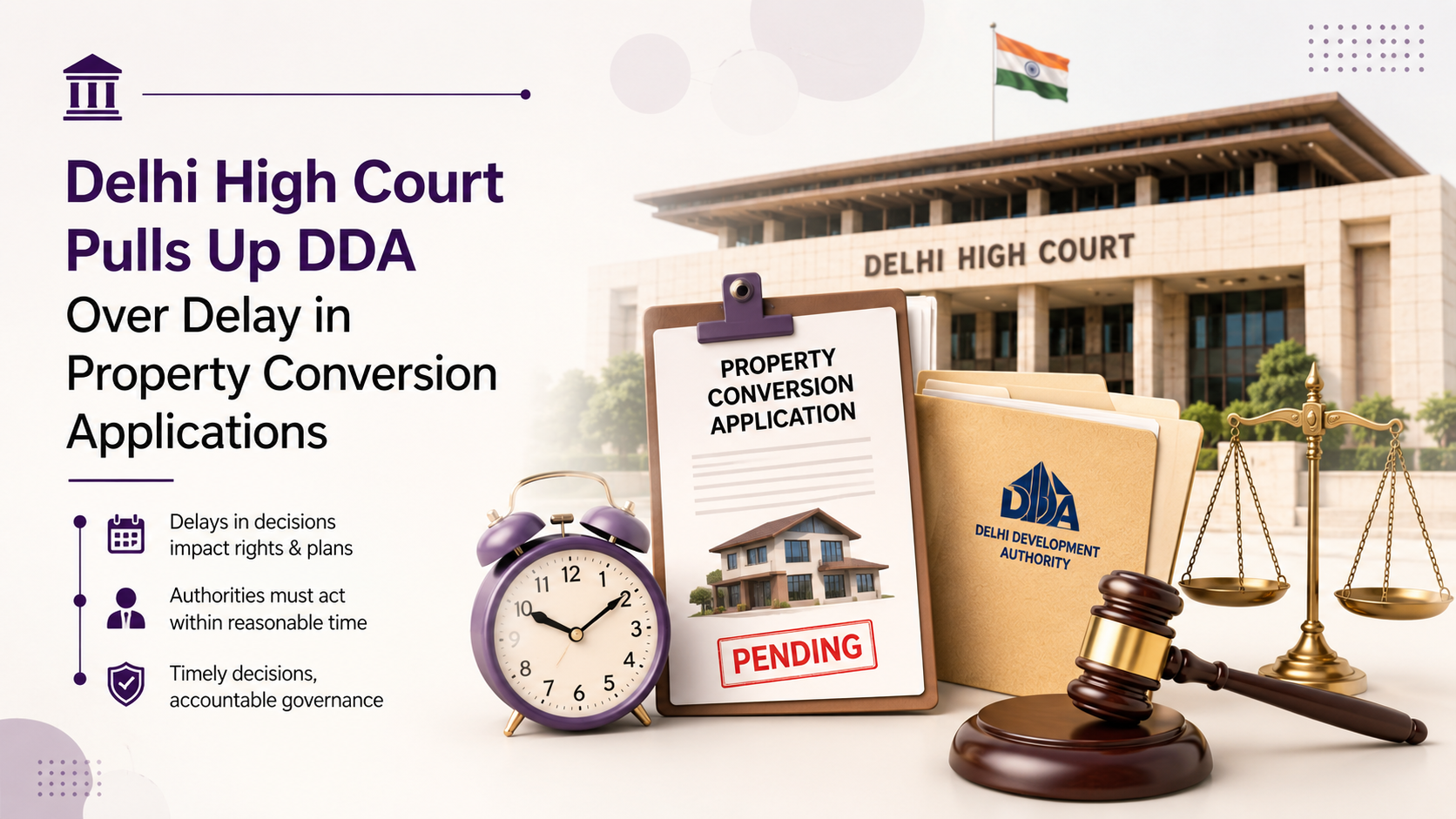
One such issue recently came under judicial scrutiny when the Delhi High Court pulled up the Delhi Development Authority (DDA) for delays in deciding property conversion applications.
The case highlights a growing concern:
Can public authorities keep applications pending indefinitely without timely decisions?
The Delhi High Court’s observations indicate increasing judicial concern over administrative inefficiency.
Understanding Property Conversion
Property conversion generally refers to the process of changing the legal status or category of a property under applicable rules and regulations.
This may involve:
- Leasehold to freehold conversion
- Land use changes
- Regulatory approvals for ownership rights
Such approvals directly impact property rights, ownership certainty, and market transactions.
Delays in these processes can create serious legal and financial difficulties for applicants.
What Concerned the Court?
The Delhi High Court expressed concern over delays by DDA in deciding pending property conversion applications.
The Court questioned why applications were not being processed within a reasonable time.
This reflects a larger issue involving:
- Administrative inefficiency
- Procedural delays
- Lack of timely decision-making
- Public inconvenience
When authorities delay decisions, citizens often bear the consequences.
Why Delays Matter
Administrative delay is not just procedural inconvenience.
It can affect:
- Property transactions
- Ownership clarity
- Investment decisions
- Financial planning
For many applicants, delayed approvals can stall important personal or commercial decisions.
Long delays also increase uncertainty and legal disputes.
The Court’s Message
The Delhi High Court’s intervention sends a clear message:
Public authorities must act within reasonable timelines.
Government agencies and regulatory bodies cannot keep citizens waiting indefinitely.
Administrative power carries administrative responsibility.
Timely decisions are essential for maintaining public trust and ensuring fair governance.
Bigger Legal Principle
This case reflects an important principle of administrative law:
Delay in decision-making can undermine fairness and accountability.
Authorities are expected to act:
- Fairly
- Efficiently
- Within reasonable time
Judicial oversight becomes important when delays begin affecting citizens’ legal rights.
Why This Ruling Matters
The Court’s observations are significant because they reinforce accountability in public administration.
The ruling highlights that:
- Administrative efficiency matters
- Delays have real consequences
- Judicial intervention remains an important safeguard
This case may also influence how public authorities handle pending applications in the future.
Final Takeaway
The Delhi High Court’s observations against DDA serve as an important reminder that governance is not just about rules—it is also about timely action.
Administrative delays can directly affect citizens’ rights and create unnecessary hardship.
As public institutions handle critical approvals, efficiency and accountability remain essential pillars of good governance.
Because delayed decisions often become denied opportunities.
#DefendInk #DelhiHighCourt #PropertyLaw #AdministrativeLaw #LegalNews