Introduction
The digital age has transformed the way information is shared, stored, and distributed. While messaging platforms have created new opportunities for communication and collaboration, they have also introduced significant challenges for law enforcement agencies, educational institutions, and regulatory bodies.
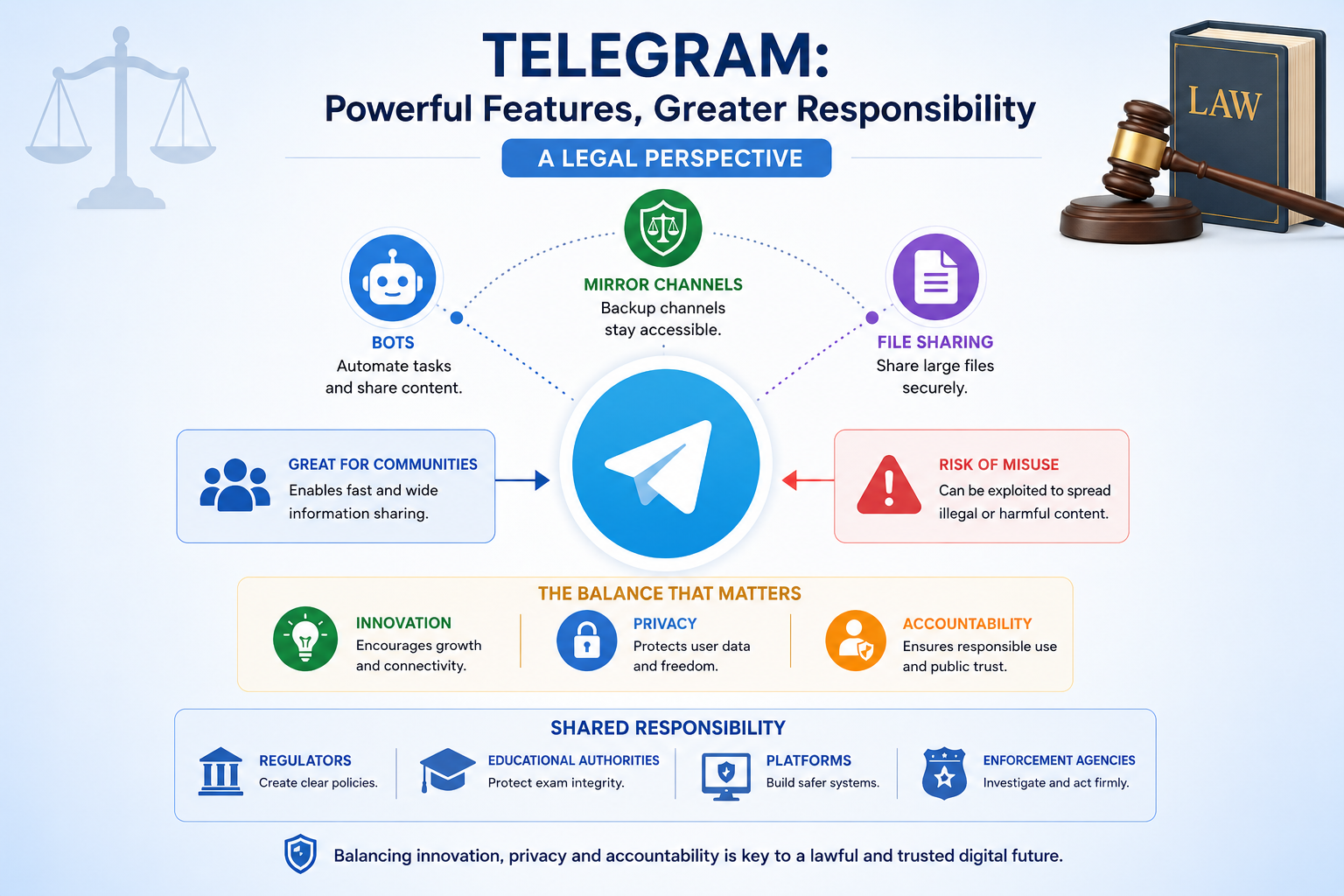
Among these platforms, Telegram has emerged as one of the most powerful communication tools due to its extensive bot ecosystem, large file-sharing capabilities, and channel management features. Recent discussions surrounding examination paper leaks have once again brought attention to how these technological features can be misused to rapidly distribute unauthorized content across thousands of users.
This raises important questions about platform responsibility, digital governance, and the growing challenge of preventing the spread of sensitive information online.
Understanding Telegram's Ecosystem
Telegram is more than a messaging application. It functions as a comprehensive communication network that combines:
- Public and private channels
- Automated bots
- Group communities
- Cloud-based storage
- Large file-sharing capabilities
- Channel forwarding systems
These features allow administrators to build interconnected networks capable of reaching large audiences within minutes.
While such tools are valuable for businesses, educators, and content creators, they can also be exploited for unauthorized distribution activities.
The Role of Bots in Information Distribution
Telegram bots are automated programs that perform specific tasks without human intervention.
Common legitimate uses include:
- Customer support automation
- News delivery
- Educational content sharing
- Community management
- Notifications and alerts
However, in misuse scenarios, bots can be configured to:
- Automatically redirect users to backup channels
- Share files instantly
- Distribute content across multiple groups
- Maintain network continuity when channels are removed
This automation significantly increases the speed at which information can spread.
Mirror Channels and Network Resilience
One of the most discussed aspects of Telegram's ecosystem is the use of mirror channels.
A mirror channel acts as a duplicate or backup destination where content remains accessible even if the original channel becomes unavailable.
Benefits for legitimate users include:
- Content preservation
- Backup communication channels
- Disaster recovery
However, in unauthorized content-sharing networks, mirror channels can make enforcement more difficult because:
- Users can be redirected automatically
- Multiple copies of content remain available
- Distribution networks continue functioning despite takedowns
This creates a highly resilient ecosystem for information dissemination.
Large File-Sharing Capabilities
Telegram supports the sharing of large files directly through its platform.
This capability benefits:
- Educational institutions
- Software developers
- Businesses
- Media organizations
At the same time, it can be misused for distributing:
- Leaked documents
- Pirated content
- Confidential materials
- Unauthorized examination resources
The combination of cloud storage and instant sharing allows content to reach large audiences within a short period.
Why Exam Leak Cases Raise Concern
Examination systems depend on confidentiality and fairness.
When leaked examination material spreads online:
- The integrity of the examination process is compromised.
- Honest candidates may be disadvantaged.
- Educational institutions face reputational damage.
- Public trust in recruitment and testing systems declines.
Digital platforms that enable rapid content distribution become a critical area of investigation whenever such incidents occur.
Challenges for Authorities
Authorities face several obstacles when attempting to stop the spread of leaked material:
1. Speed of Distribution
Information can reach thousands of users before intervention occurs.
2. Multiple Backup Channels
Content often exists across numerous channels and groups.
3. Automated Redirection
Bots can guide users to alternative locations instantly.
4. Cross-Platform Sharing
Content may spread from one platform to multiple social media networks.
5. Global Infrastructure
Jurisdictional and legal challenges can complicate investigations.
The Need for Stronger Digital Governance
Experts argue that combating digital content abuse requires a balanced approach that protects both:
- User privacy
- Public interest
Potential measures include:
- Faster response mechanisms
- Improved platform cooperation
- Enhanced digital monitoring capabilities
- Public awareness initiatives
- Stronger cybersecurity and compliance frameworks
The objective is not to restrict legitimate communication but to prevent misuse that harms institutions and society.
Conclusion
Telegram's powerful combination of bots, mirror channels, and large-scale file-sharing capabilities has made it one of the most influential communication platforms in the digital world. While these features provide significant benefits for legitimate users, they can also be exploited to distribute sensitive or unauthorized content at scale.
Recent discussions surrounding exam leak investigations highlight the broader challenge facing regulators, educational authorities, and technology platforms alike: balancing innovation and privacy with accountability and public trust. As digital communication networks continue to evolve, addressing these concerns will remain a critical priority for policymakers and enforcement agencies worldwide.