Disclaimer
This article is intended solely for legal awareness and reporting purposes. The case is still under judicial consideration, and the allegations against the accused have not been finally adjudicated by a court of law. The grant of bail does not amount to acquittal or a finding of innocence, nor does it determine the merits of the prosecution's case. Readers should avoid drawing conclusions until the trial is completed.
A Major Development in a High-Profile Case
The TCS Nashik case has attracted nationwide attention due to allegations involving workplace sexual harassment and religious conversion at a TCS-linked BPO unit in Nashik.
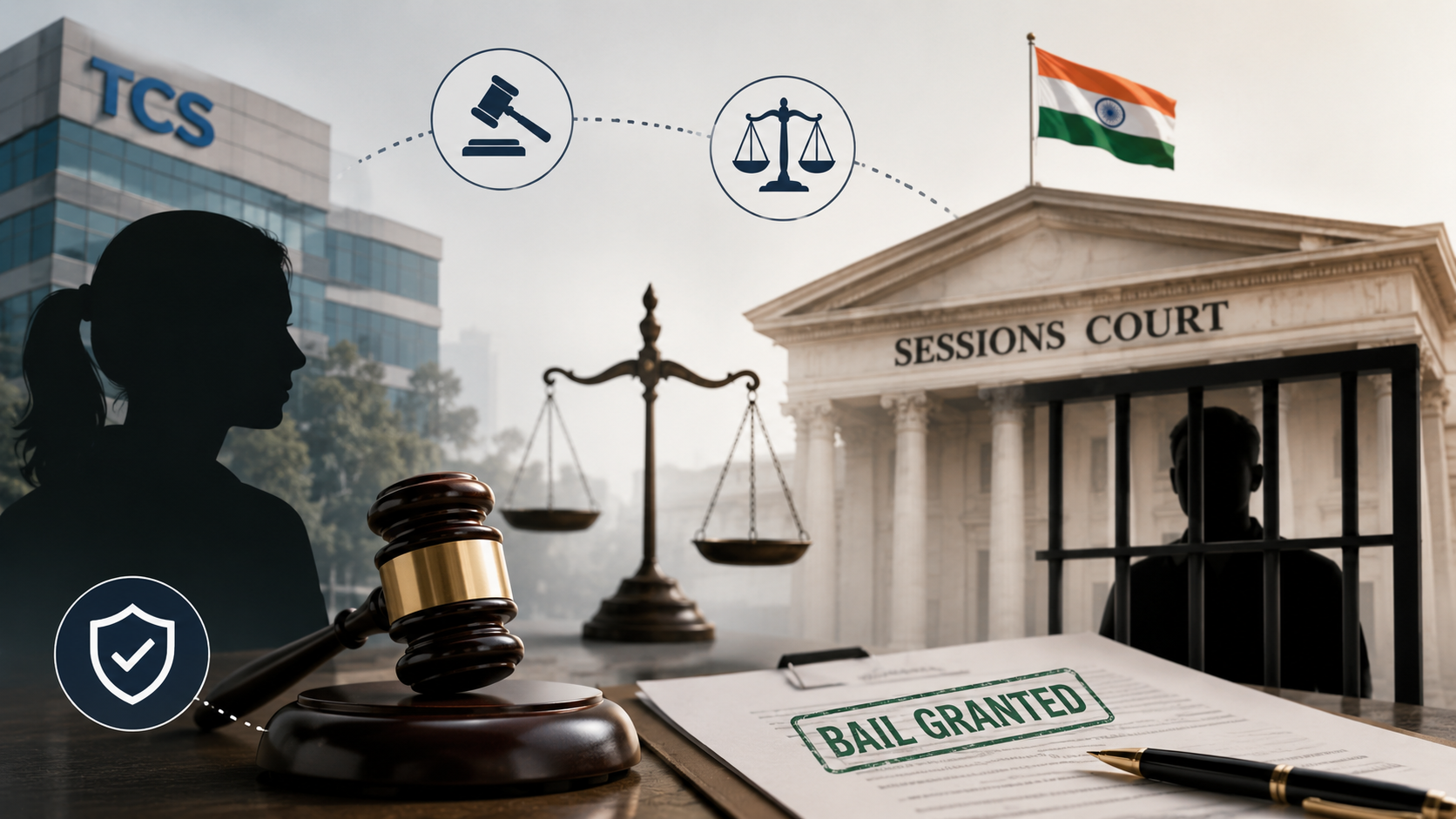
In the latest development, a Sessions Court has granted bail to Nida Khan, one of the accused in the case. However, the court declined to grant similar relief to another accused, Danish Shaikh, highlighting that bail decisions may differ depending on the allegations, evidence, and individual role attributed to each accused.
Background of the Case
The case originated after complaints alleging serious offences, including workplace sexual harassment and attempts at religious conversion. Over time, multiple FIRs were registered, leading to a Special Investigation Team (SIT) inquiry and the arrest of several accused.
According to investigators, the allegations involve conduct within a workplace environment and actions that are currently under criminal investigation.
The prosecution's investigation remains ongoing.
What Happened in Court?
The Sessions Court granted bail to Nida Khan after hearing submissions from both sides.
According to reports, the defence argued that:
- The chargesheet had already been filed.
- Continued custodial detention was no longer necessary.
- Medical grounds were also raised during the bail hearing.
At the same time, the court did not extend similar relief to another accused, indicating that bail applications are assessed individually based on the specific facts and allegations concerning each person.
What Does Bail Mean?
One of the biggest misconceptions is that bail means the accused has been cleared of all charges.
That is incorrect.
Legally, bail simply allows an accused person to remain out of custody while criminal proceedings continue, subject to conditions imposed by the court.
A bail order does not decide guilt or innocence.
The trial, examination of evidence, and final judgment are separate stages of the criminal justice process.
Why This Order Matters
The latest order illustrates an important principle of criminal law:
Bail decisions depend on the circumstances of each accused—not merely on the existence of a common case.
Courts may consider factors such as:
- Stage of investigation
- Filing of the chargesheet
- Nature of allegations
- Individual role attributed to each accused
- Possibility of influencing witnesses or evidence
- Medical or humanitarian considerations, where relevant
These factors can lead to different outcomes for different accused persons in the same case.
The Bigger Legal Perspective
The TCS Nashik matter has also reignited discussion on:
- Workplace safety
- Employer responsibility
- Criminal investigation procedures
- Individual rights during investigation
- The balance between personal liberty and the interests of justice
Cases involving multiple accused often require courts to assess each person's application independently rather than issuing identical orders.
Key Takeaway
The Sessions Court's decision to grant bail to Nida Khan marks an important procedural development in the TCS Nashik case.
However, the criminal proceedings remain ongoing, and the allegations will ultimately be tested during trial.
The bail order should therefore be understood as a procedural decision—not a final determination of the case.
As the investigation and trial continue, the courts will assess the evidence before reaching any final conclusions.
Sources
Tags
#DefendInk #LegalNews #IndianLaw #BailLaw #CriminalLaw #CourtUpdate #TCSNashikCase #LegalAwareness #JusticeSystem #SessionsCourt