Introduction
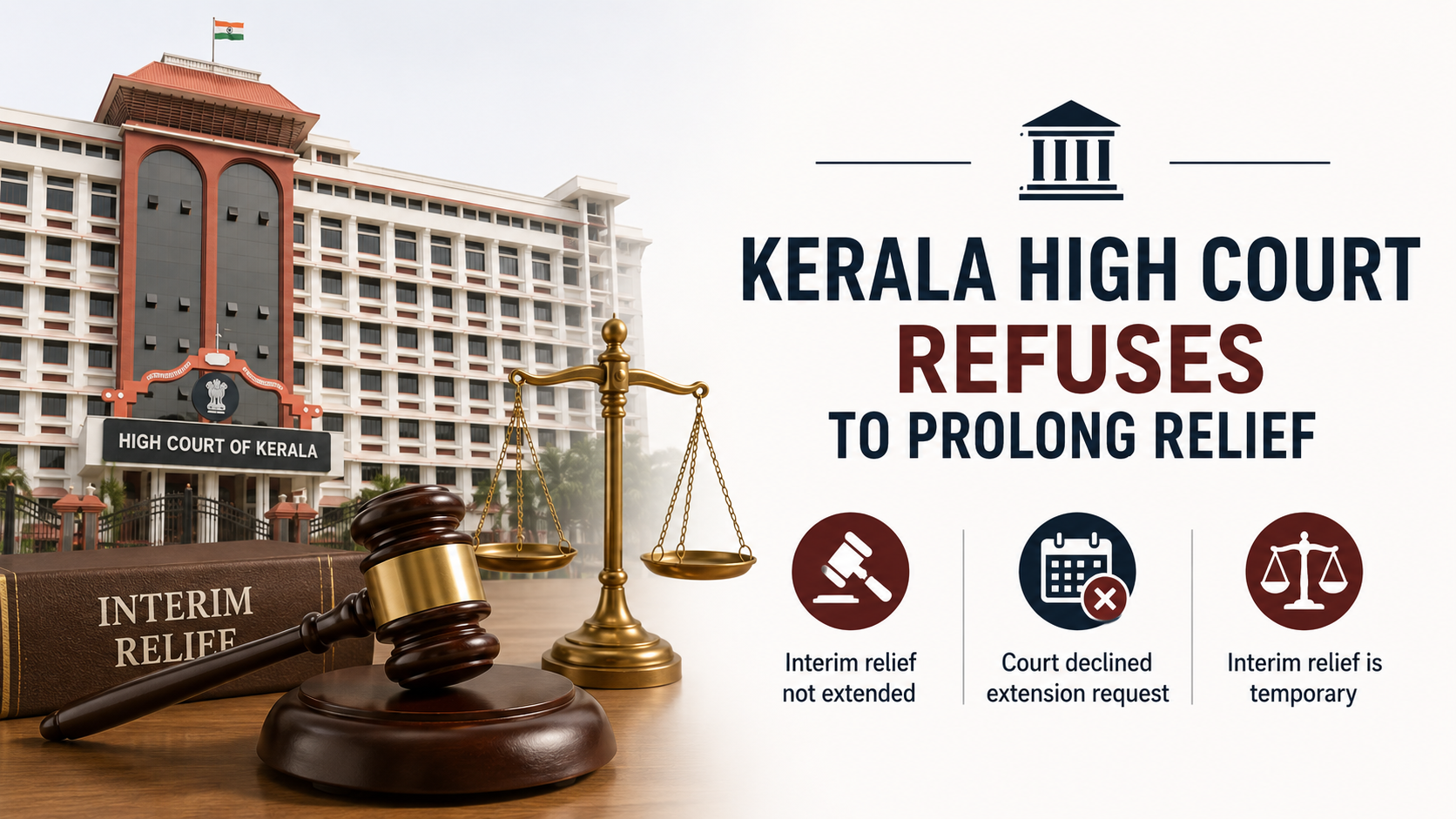
In a recent development, the Kerala High Court declined to extend the interim relief previously granted to the husband of Monalisa, who gained public attention during the Kumbh Mela.
The decision has drawn legal attention because it highlights an important aspect of judicial proceedings:
Interim relief is temporary and subject to court review based on facts, urgency, and legal merit.
The order underscores the discretionary power courts exercise while granting or extending temporary protections.
Background of the Case
The matter involved Monalisa’s husband, who had earlier obtained interim relief from the Kerala High Court.
Interim relief generally refers to temporary protection granted by courts while the main case remains pending.
Such relief may include:
- Protection from coercive action
- Temporary stay orders
- Limited procedural safeguards
The relief is intended to prevent immediate harm until the court hears the matter in detail.
Key Legal Issue
The primary issue before the Kerala High Court was:
Should the interim relief granted earlier be extended further?
The Court had to determine whether circumstances justified continuation of temporary protection.
This involved examining:
- Nature of the allegations
- Urgency of relief
- Case merits
- Need for judicial intervention
Court’s Observation
The Kerala High Court examined the circumstances surrounding the case and considered whether further extension of relief was legally justified.
The Court ultimately chose not to prolong the temporary protection.
Although interim orders provide short-term safeguards, courts are not obligated to continue them indefinitely.
Extension depends on:
- Strong legal grounds
- Ongoing urgency
- Balance of convenience
- Interests of justice
Court’s Decision
The Kerala High Court refused to extend the interim relief previously granted.
This means the temporary protection available to the petitioner ceased upon expiry of the earlier order.
The matter may still continue through regular legal proceedings, depending on the status of the main case.
The refusal to extend interim relief does not automatically determine final rights or liabilities.
It only reflects the Court’s decision regarding temporary protection at this stage.
Understanding Interim Relief
Interim relief plays an important role in legal proceedings.
Its purpose is to:
- Prevent immediate harm
- Preserve status quo
- Protect parties until final adjudication
However, courts assess such relief carefully.
Granting relief and extending relief are two separate judicial considerations.
A party seeking extension must satisfy the court that continued protection remains necessary.
Why This Matters
This case highlights a key legal principle:
Temporary relief is never permanent relief.
Courts retain full discretion to:
- Grant relief
- Modify relief
- Vacate relief
- Decline extension
This ensures that interim protections remain balanced and justified.
Legal Significance
The ruling reinforces the principle that judicial discretion governs interim orders.
It serves as a reminder that litigants cannot assume automatic continuation of temporary relief.
Each extension request must stand on its own legal merits.
The case also reflects how courts balance:
- Individual protection
- Procedural fairness
- Interests of justice
Conclusion
The Kerala High Court’s refusal to extend interim relief in Monalisa’s husband’s case highlights the temporary nature of judicial protection granted during ongoing proceedings.
The ruling emphasizes that interim relief remains subject to constant judicial review and cannot be treated as indefinite protection.
As the matter progresses, the final outcome will depend on the merits of the main proceedings.
For now, the order stands as an important reminder of how courts approach temporary relief with caution and legal scrutiny.
#DefendInk #KeralaHighCourt #LegalNews #CourtUpdate #IndianLaw