🏠 Can Unpaid Domestic Work Be Valued In Money? The Supreme Court Says Yes
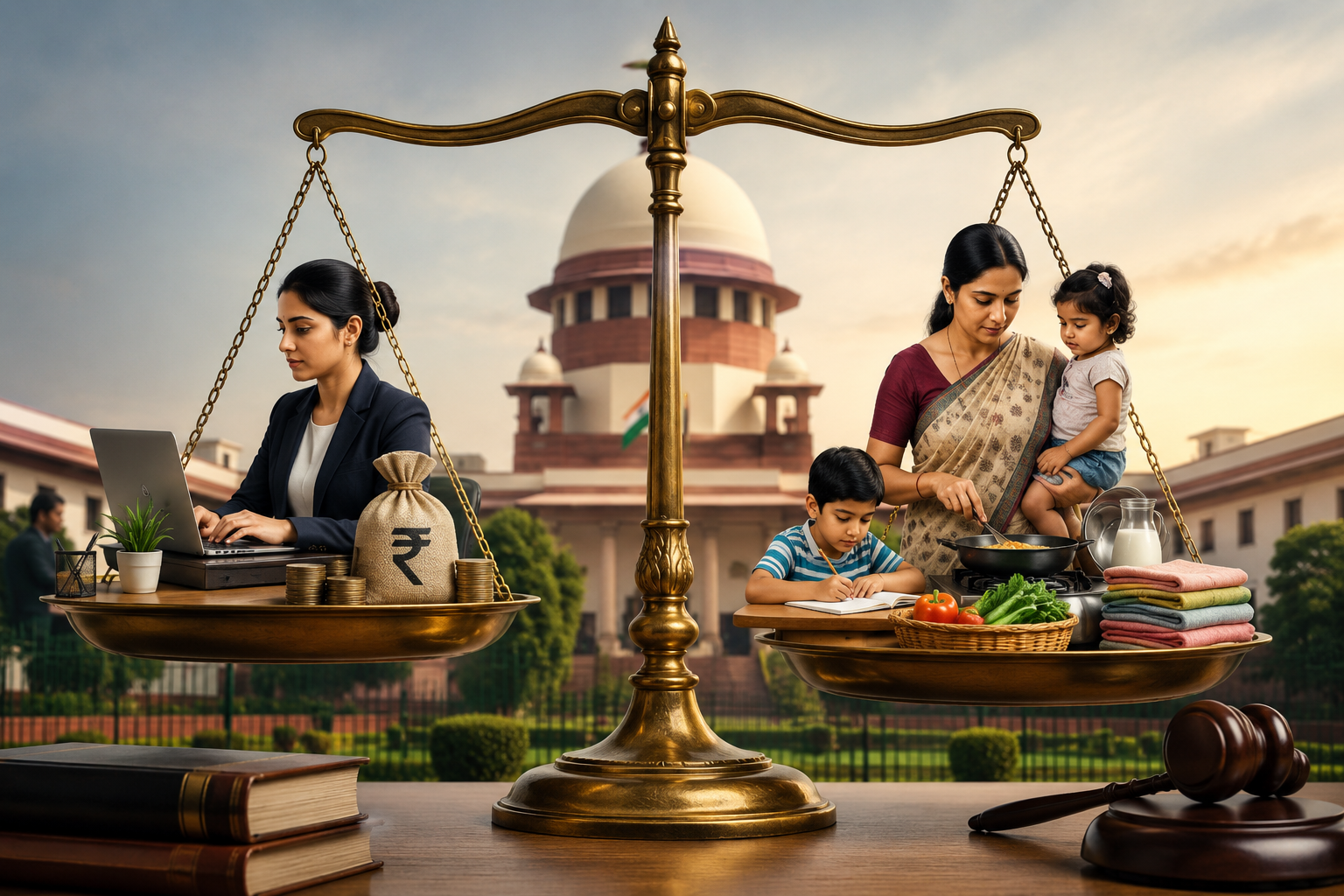
Consider a family where one member earns a salary while another manages the household, cares for children, prepares meals, and ensures daily life runs smoothly. In such cases, a critical question arises: if a tragedy occurs, should the law disregard the homemaker's contributions simply because they do not receive a salary?
Recently, the Supreme Court addressed this significant issue and made a landmark observation:
Homemakers are nation builders.
This statement highlights the vital role homemakers play in the socio-economic framework of our society. The Supreme Court's ruling resonates with its earlier remarks in cases like Rajesh Kumar v. State of U.P., where the Court recognized the importance of acknowledging non-monetary contributions when assessing damages in personal injury and wrongful death cases.
Furthermore, in the case of National Insurance Co. Ltd. v. Pranay Sethi, the Supreme Court emphasized the necessity of considering the actual contributions of homemakers when determining compensation, explicitly stating that the economic value of domestic work should not be overlooked.
This progressive interpretation by the Supreme Court marks a shift towards a more inclusive understanding of economic contributions, advocating for the recognition of unpaid domestic work as valuable and deserving of consideration in legal contexts.
As we advance, it is crucial for legal frameworks to evolve and adequately reflect the realities of domestic labor and its significance in our society.